Most buyers show up to inspect a used car with nothing but their phone and hope.
That’s a mistake.
You don’t need a full mechanic’s toolbox. But having a few simple items dramatically increases your ability to spot problems before you buy.
Here’s exactly what you should bring when inspecting a used car.
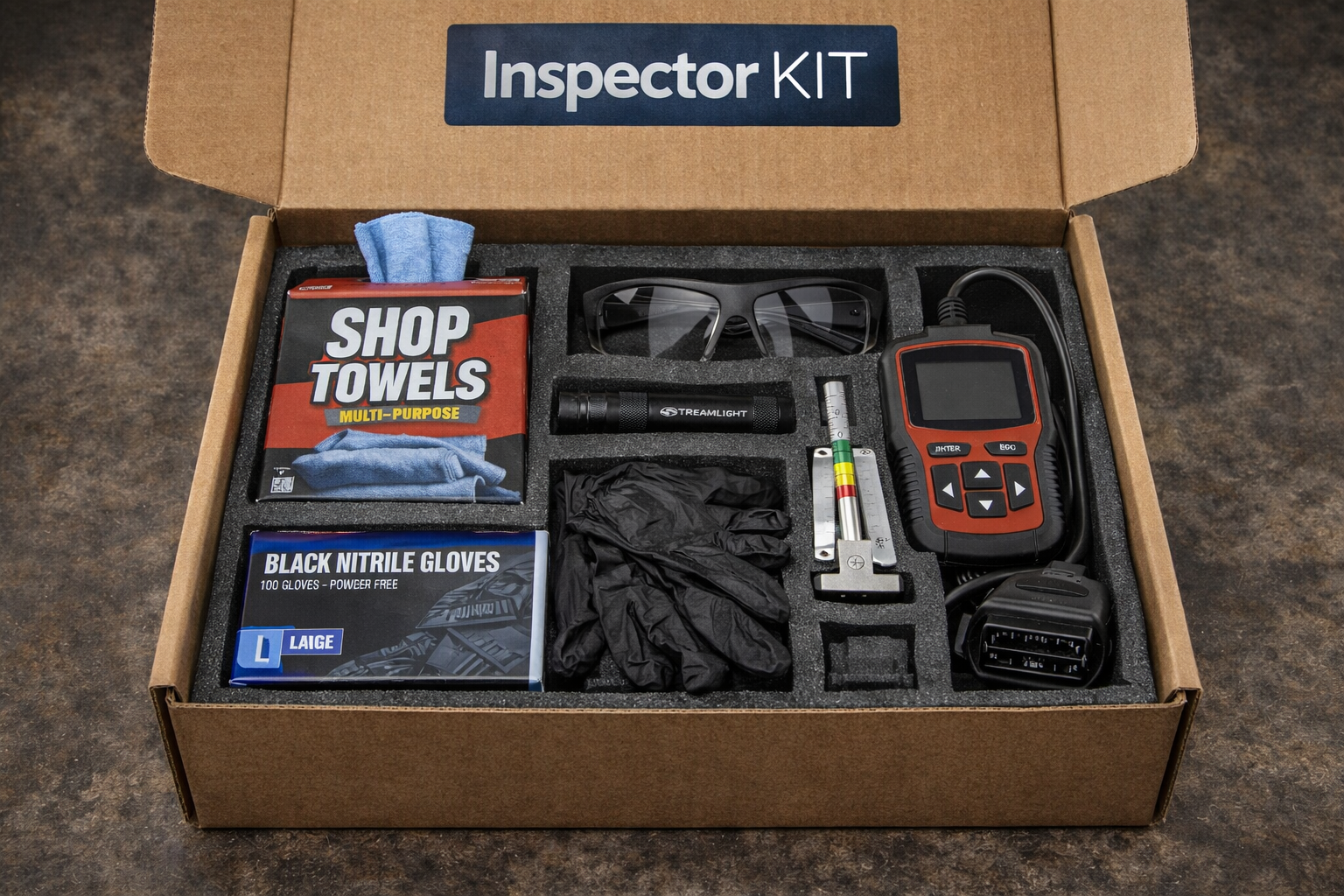
1. A Flashlight
Even during the day, you’ll need a flashlight.
Use it to check:
- Under the hood
- Inside wheel wells
- Under the vehicle
- Trunk corners
- Under seats
Shadows hide problems. Light reveals them.
2. OBD Scanner (With Readiness Monitor Check)
This is one of the most important tools.
An OBD scanner allows you to:
- Check for stored trouble codes
- See if codes were recently cleared
- Confirm emission readiness monitors
Some sellers clear codes before selling.
A readiness check can expose that.
This tool alone can save you thousands.
3. Tire Tread Depth Gauge
Tires are expensive.
Check for:
- Even tread wear
- Adequate depth
- Signs of alignment issues
Uneven wear can indicate suspension or steering problems.
4. Brake Pad Measuring Tool (If Accessible)
Brake wear matters.
If visible through the wheel, measure:
- Remaining brake pad thickness
Low pads aren’t necessarily a deal breaker.
But they affect negotiation and future cost.
5. Disposable Gloves
You’ll be checking:
- Fluids
- Under the hood
- Underbody components
Gloves keep your hands clean and allow you to inspect confidently.
6. Shop Towels Or Rags
Use them to:
- Check oil condition
- Wipe dipsticks
- Clean surfaces for better visibility
Oil color and smell tell a story.
7. Notepad Or Digital Checklist
Don’t rely on memory.
Write down:
- Noises you hear
- Warning signs
- Maintenance gaps
- Items needing attention
Clear notes help you decide calmly later.
8. Your Phone (For More Than Photos)
Use your phone to:
- Take detailed photos
- Record cold start video
- Capture engine sounds
- Verify VIN
- Check recall information
Document everything.
9. A Calm Mind And Enough Time
This may be the most important item.
Don’t show up rushed.
Don’t inspect in the dark.
Don’t skip steps because you’re excited.
Slow decisions are better decisions.
Optional But Smart
- Small mirror (to look under hard-to-see areas)
- Magnet (to detect body filler in repaired panels)
- Moisture meter (advanced use for flood detection)
You don’t need these every time, but they add confidence.
Why Preparation Matters
Showing up prepared changes the dynamic.
It shows the seller:
- You’re serious
- You understand process
- You’re not guessing
And more importantly, it protects you.
Final Thought
You don’t need to be a mechanic to inspect a used car properly.
You just need the right tools and the right mindset.
Preparation removes pressure.
Inspect before you invest.